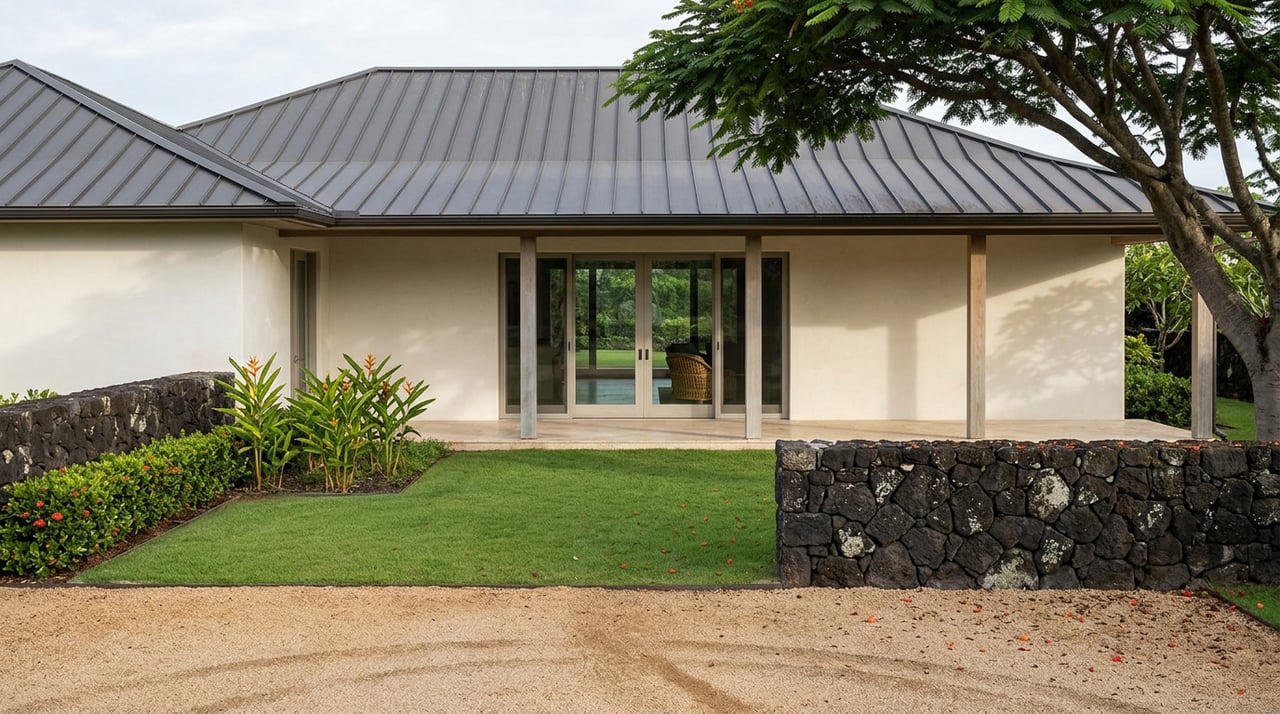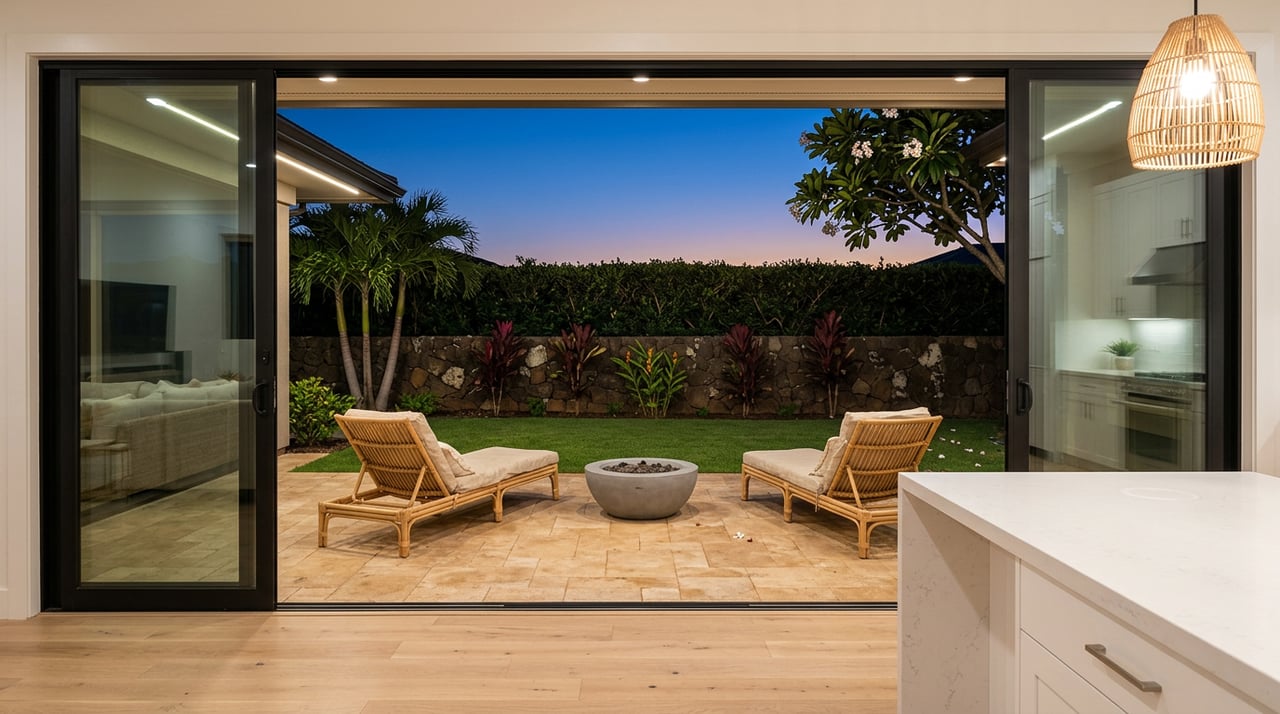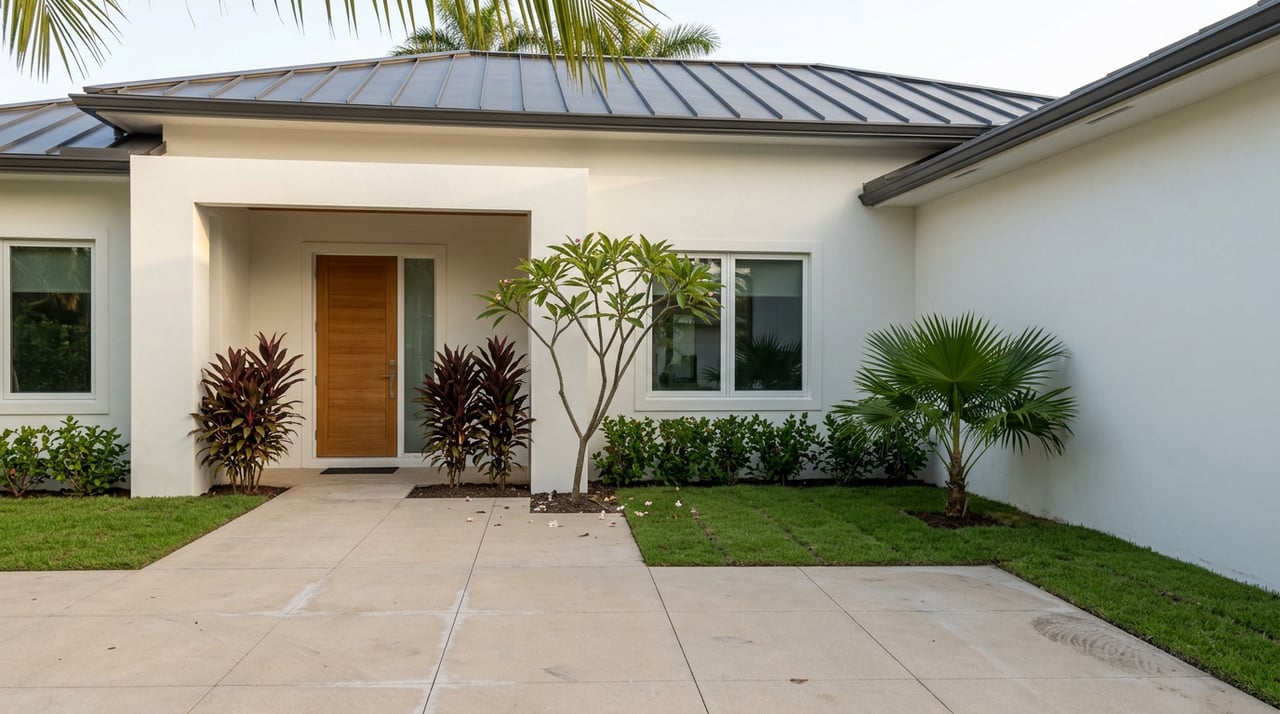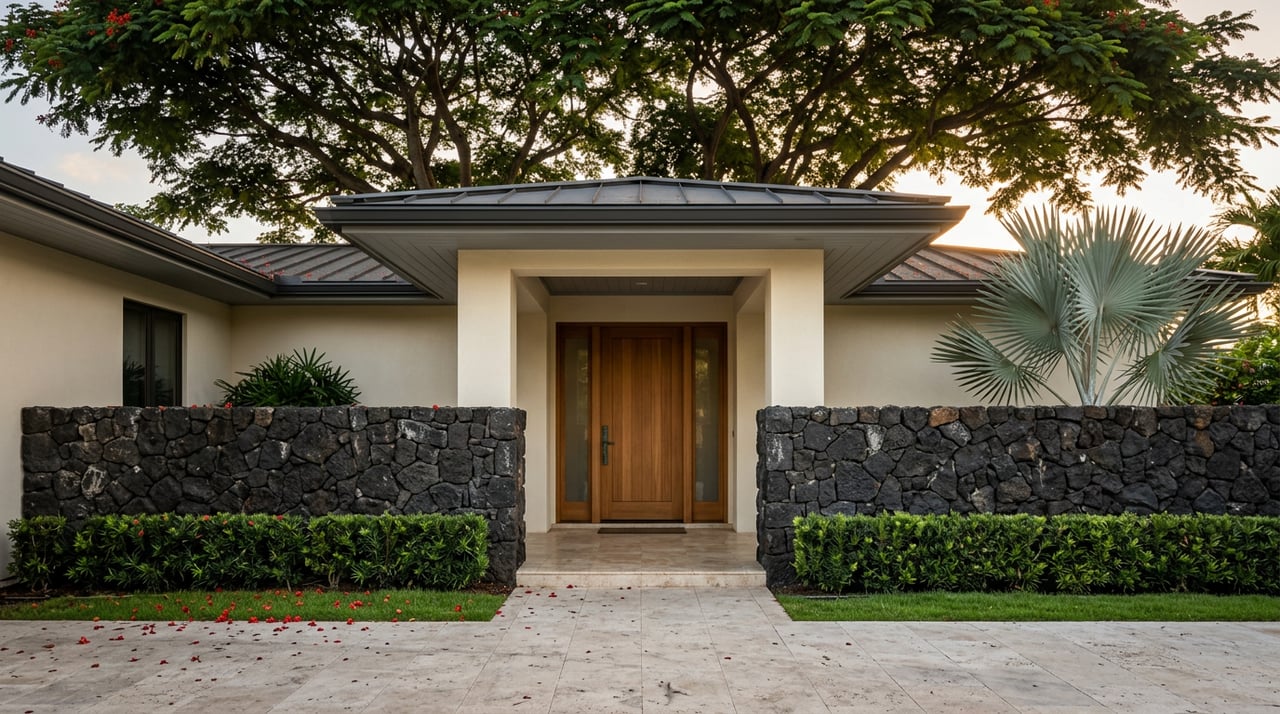
Seven homes. That was the entire active inventory in Makena as of early June 2026, ranging from just over $9 million to just under $30 million. When your total shelf of comparable sales fits on two hands, a single closing at either end of that range can swing the median by seven figures without a single home actually losing or gaining value. That is the trap waiting for anyone who pulls up Makena's year-over-year price chart and reads it the way they would read a chart for a neighborhood with sixty sales a month.
And the chart does look alarming at first glance. Mid-2026 market data showed the Wailea and Makena corridor posting some of the steepest median-price declines on Maui, in the same company as West Maui's Kaanapali, while Central Maui and Upcountry districts were posting gains over the same stretch. If you are shopping this corridor, or you own here and are wondering what your equity looks like, that number deserves a second look before it changes your decision.
The number that contradicts the headline
Here is the detail that gets buried under the decline: Wailea's sales volume did not shrink alongside its median price. It doubled. More transactions closed, at a wider spread of price points, and the middle of that spread landed lower than it did a year earlier. That is not the same story as values falling. It is the story of a different mix of homes changing hands.
Compare that to what was happening everywhere else on Maui at the same time. Pukalani, Kahului, and Makawao all posted year-to-date median gains. Kihei's median slipped only slightly while its sales volume jumped 28 percent. Wailuku, the island's busiest district by transaction count, saw its median fall over 15 percent, which in a high-volume market is a real signal worth watching. In Wailea and Makena, with far fewer sales to begin with, the same size of median swing means something closer to noise.
| District | 2026 median trend | What's actually driving it |
|---|---|---|
| Pukalani, Kahului, Makawao | Up year-to-date | Steady owner-occupied demand |
| Kihei | Slight dip | Sales volume up 28 percent |
| Wailea | Largest decline in the corridor | Sales volume doubled; different homes trading |
| Wailuku | Down over 15 percent | High transaction count makes this a real signal |
For a market this thin, the median is a description of which specific estates happened to close, not a verdict on the neighborhood's worth. If you are pricing a listing here, or trying to figure out what a comparable home should sell for, the honest answer is that Makena does not have enough transaction volume to give you a clean trend line. You are pricing against a handful of data points, and your agent's judgment about the specific property matters more here than in almost any other Maui submarket.
The story that will actually move Makena's market
While that thin-inventory noise was playing out in the sales data, a much bigger and more concrete change was working its way through Maui County's planning process. On August 11, 2026, the Maui Planning Commission approved a substantially scaled-back version of Mākena Mauka, a master-planned residential community proposed for the hillsides above Mākena State Park. This is the number that actually tells you something about where Makena is headed, because unlike a seven-home median, it comes with a defined scope.
The original 2024 proposal called for 900 new homes and drew sharp community pushback. Residents surveyed as part of a social impact assessment led by Heidi Guth of the consulting firm Kai Ho'oulu raised concerns about water, traffic, and impacts on Native Hawaiian access to land long used for fishing and camping. One resident, Janelle Kekiwi, said at the time that the area had become "unrecognizable with all the development." That feedback led developers to cut the project by 27 percent, down to 652 homes, split between 543 market-rate units and 109 on-site workforce housing units.
The approved plan still needs state and county sign-off before construction can begin, and the timeline is long by design. Developers expect roughly $4 billion in investment across three ten-year construction phases starting in 2028, with the workforce housing built in the first phase. The project also folds in the existing Mākena North Golf Course and a currently closed South Golf Course slated for renovation, along with about 135,000 square feet of support buildings including golf maintenance facilities, staff offices, and restaurants.
Two details in that plan matter more to a buyer or seller than the headline unit count. First, no vacation rentals will be permitted anywhere within the project area. Second, based on the developer's experience with similar communities, about 90 percent of the residential units are expected to function as part-time homes rather than primary residences. Put those together and you get a project built almost entirely for second-home ownership, with zero added short-term rental inventory to compete against the resort-condo investor market that dominates parts of Kihei and West Maui.
What this actually changes if you're buying or selling here
If you are shopping Makena as an investment play with rental income in mind, Mākena Mauka is not going to be a source of new short-term rental supply, now or after 2028. That segment of demand stays concentrated where it already lives, in the condo buildings closer to the beach and in Kihei. If your interest in Makena is a personal second home or eventual full-time residence, the new project adds meaningful long-term inventory, but not soon. The first phase does not break ground until 2028, and the full build-out stretches across three decades. Anyone buying resale in Makena today is not competing with this new supply for at least a few years, and the workforce housing component means the earliest new units on the market will not be aimed at the same $9 million to $30 million buyer currently shopping the existing estate inventory.
For sellers, the thin-comp problem from the first half of this piece and the long construction runway from the second half point in the same direction: pricing a Makena property well right now depends less on chart-reading and more on a granular, property-by-property read of what has actually closed nearby, plus an honest account of how the approved development might affect long-term traffic patterns and neighborhood character in the areas closest to the new project boundary. A blanket read of "the median is down" tells a seller almost nothing useful. A read of "here are the three comparable closings in the last eighteen months and here is what's approved above the state park" tells them a great deal.
Makena still holds one advantage no amount of new construction changes: Mākena State Park itself remains public land, protected and open to residents and visitors regardless of what gets built on the hillsides above it. That has not been part of the negotiation in any version of the Mākena Mauka plans, and it is worth remembering when you are weighing what actually anchors this stretch of coastline.
A few questions worth asking directly
Will any homes in the new Mākena Mauka development be available as vacation rentals? No. The approved plan explicitly prohibits vacation rentals within the project area, which sets it apart from much of the resort-condo inventory elsewhere in South Maui.
When will the new homes actually be available to buy? Construction is planned in three phases over 30 years starting in 2028, with workforce housing built first. Market-rate homes will follow in later phases, so this is not a near-term supply change for anyone shopping Makena today.
Does the golf course closure affect homes near the existing course? The plan keeps the existing Mākena North Golf Course in play and includes the closed South Golf Course for renovation as part of the broader project, rather than removing golf access from the area.
Why is Makena's median price swinging so much more than other Maui districts? Because the sample size is small. With only a handful of active listings and closings at any given time, a single high or low sale at the extremes of the market can move the median far more than it would in a district with dozens of monthly transactions.
If you are trying to make sense of what a specific Makena property is actually worth, or what the approved development above the state park means for a home you already own, that is a conversation worth having with someone who tracks this corridor closely rather than reading it off a chart built for a much bigger market. Maui Homes by Jason works this exact stretch of South Maui, and Jason Gilbert would be glad to walk through the comps that actually apply to your situation. Let's find your Maui home.