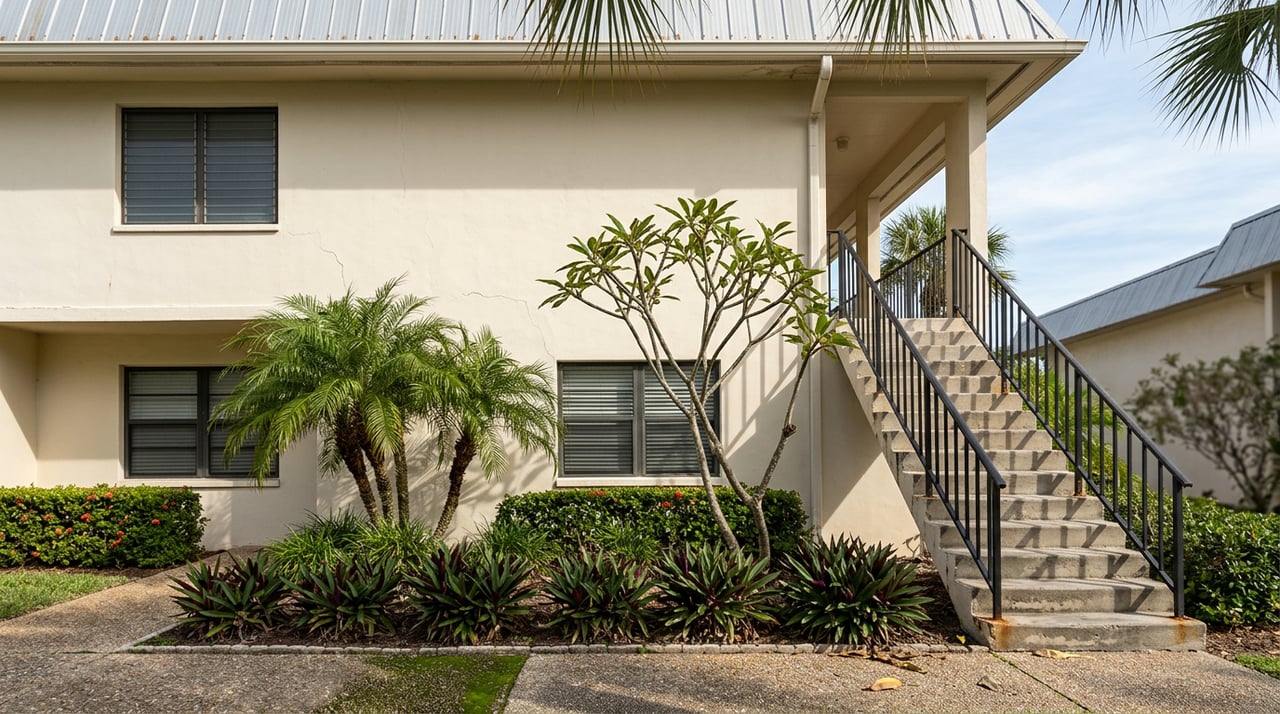
A Maui Now report on the storms says Kihei Kai Oceanfront Condos, a 16-unit building, had survived more than four decades without a flooding problem before the 2025 storm. The association spent roughly $1 million stabilizing the structure after the 2025 storm, with insurance covering about three-quarters of that bill. On March 13, 2026, another Kona low hit, and the building did not survive.
That story is dramatic enough to make headlines, and it did. But the mechanics behind it, aging infrastructure meeting an insurance and reserve system that wasn't built to absorb the cost, are running quietly through nearly every condo association in Kihei right now. Most buyers never see them until they're already in escrow, if they see them at all.
The Number on the Listing Isn't the Number That Matters
Kihei is doing more real estate business than anywhere else on Maui at the moment. In the first quarter of 2026, 33 single-family homes sold there, up 65 percent from the same period a year earlier, and another 59 condos changed hands at a median price of $610,000, well under the island-wide condo median of roughly $847,000 for the same stretch. That gap is the reason so many buyers land in Kihei after getting priced out of Wailea: the math works here in a way it doesn't elsewhere on the island.
But the purchase price on a Kihei condo tells you almost nothing about what you'll actually pay to own it. The number that matters more is buried in a document most buyers never ask for until an agent tells them to: the AOAO resale package. That package is where you find out whether the building's roof, plumbing, and air conditioning are due for replacement in the near term, whether the association has the reserves to pay for it without a special assessment, and whether the unit's short-term rental status is about to change out from under you. None of that shows up in the listing photos.
A Building Stock Running Out of Runway
Kihei's oceanfront condo stock is old. As of 2023, the median age of oceanfront complexes in the neighborhood was 48 years, with the oldest, Hale Kai O Kihei, dating to 1969. Roofs, stucco exteriors, elevators, and central air systems all have finite lifespans, and a lot of Kihei's buildings are hitting the back half of those lifespans at roughly the same time. That's not a coincidence buyers should treat as background noise. It's the reason special assessments in Kihei are showing up as a pattern rather than isolated bad luck.
A few examples currently on the record:
| Association | 2026 Activity | What It Signals |
|---|---|---|
| Kihei Villages | Property-wide waterproofing and paint project began May 1, 2026, moving building by building | An aging exterior envelope reaching the point where deferred maintenance becomes mandatory capital work |
| Sugar Beach | Exterior stucco repair and full central air conditioning overhaul, funded through a special assessment | Two major systems, envelope and HVAC, failing in the same window |
| Kihei Shores | Association FAQ explicitly tells owners that skipping annual fee increases to keep dues low "could be much worse" because it invites a special assessment later | An owner-facing acknowledgment that flat fees are a warning sign, not a selling point |
None of these are hidden. They're published on the associations' own sites or referenced in local real estate reporting. But they don't show up when you're scrolling listings, so buyers should review the association materials and applicable disclosures.
Bill 9 Adds a Second Clock
Kihei also carries the highest concentration of what's known locally as Minatoya List condos on Maui, roughly 60 percent of them are in South Maui. These are apartment-zoned buildings that have operated as short-term vacation rentals under a decades-old exception. That exception is now being phased out under Maui County's Bill 9, officially Ordinance 5909, which Mayor Richard Bissen signed into law on December 15, 2025. StaySTRA says the deadline for South Maui, including Kihei, is January 1, 2031.
There had been talk of a reprieve. A County Council-appointed group recommended reclassifying thousands of these units into new hotel zoning categories that would have let them keep operating as vacation rentals. The Maui Planning Commission rejected that idea on February 25, 2026, voting 8-1 against it. Two lawsuits challenging Bill 9 on constitutional grounds are still working through the courts, and as of this spring neither has produced an injunction.
None of that means Kihei condos are becoming unbuyable. It means the STR income a listing agent quotes you today has an expiration date that a mainland buyer, or anyone comparing this to a mainland condo purchase, might not think to ask about. If you're financing the purchase partly on projected rental income, or if resale value depends on the next buyer being able to rent it out, that clock belongs in your math now, not after closing.
What the Flood Risk Actually Looks Like on the Ground
Kihei Kai sits at the junction of North and South Kihei Road, a spot that had gone more than four decades without a flooding problem before 2025. Part of the reason the March 2026 storm did as much damage as it did traces back to a bridge over Waiakoa Stream at the north end of South Kihei Road, rebuilt under the 2016 Kihei Drainage Master Plan with two culverts only 10 feet wide and 3 feet high. Those culverts and the railings added during the rebuild trap debris during heavy rain, which diverts floodwater sideways down the road instead of letting it flow straight out to the ocean, the way the older, railing-free bridge design used to allow.
That's a specific, physical explanation for why certain stretches of North Kihei flood and others don't. It's not uniform risk across the neighborhood. Central and South Kihei sit largely in flood zones designated X, which carry minimal flood risk. Properties in AE or VE zones are more common in the lower-lying corridors near Maalaea and North Kihei. Knowing which zone a specific building sits in, not just which town it's in, is part of due diligence here in a way it wouldn't be in most mainland markets.
The Leverage You Actually Have Right Now
Here's what makes 2026 a different moment to be asking these questions than, say, 2022. Active condo inventory across Maui hit 902 listings as of April 30, 2026, the highest level tracked in recent monitoring, and close to 300 of those listings sit in Kihei's $500,000 to $999,999 tier alone. Pending condo sales for April 2026 ran roughly 52 percent below the April average from 2017 to 2019. Prices have been trending down, and entry-level condos along with units carrying Bill 9 exposure are seeing the steepest adjustments.
That combination, more inventory and slower demand, means a buyer today can request the full resale package, review the reserve study, ask about pending assessments, and walk away without losing the deal to a backup offer. That wasn't true a few years ago, when Kihei condos moved fast enough that asking too many questions could cost you the unit. The Housing Affordability Index for Maui condos jumped 26 percent year over year in early 2026, largely on the back of conditions like these. Slower doesn't mean worse. It means you finally have room to do the diligence that protects you.
What to Ask For Before You Waive Anything
Before you remove any contingencies on a Kihei condo, request these from the AOAO or the seller's agent:
- The reserve study, including the date it was last updated and whether the board is funding it as recommended
- A five-year history of special assessments, approved or under consideration, with amounts and timelines
- The current delinquency rate among owners
- Master insurance certificates, including whether hurricane or flood deductibles are percentage-based rather than flat dollar amounts
- Written confirmation of the building's Bill 9 status, including whether it's on the Minatoya List and what its specific phase-out deadline is
- Flood zone designation for the specific unit, not a general neighborhood assumption
A Few Questions Worth Asking Directly
Does every Kihei condo carry this level of risk? No. Buildings vary widely in age, reserve health, and flood zone placement. A well-managed association with a current reserve study and healthy funding looks very different from one that's been deferring maintenance. The point isn't to avoid Kihei. It's to stop assuming the listing price tells you what you need to know.
Is Kihei still a reasonable place to buy in 2026? For buyers willing to do the paperwork, yes. The same conditions that create risk, aging buildings and a market in transition, are also why prices sit well below the island median and why sellers are more willing to negotiate and disclose than they were a few years ago.
How do I find out if a specific Kihei building is on the Minatoya List? The list is maintained by Maui County and organized by Tax Map Key. It's public but not always easy to parse on your own, which is where working with someone who checks this regularly for clients on Maui saves real time.
Buying in Kihei right now can still be one of the more accessible ways onto this island. It just requires reading the documents that don't come with the listing photos. If you're evaluating a specific Kihei condo and want a second set of eyes on the resale package before you waive anything, Jason Gilbert at Maui Homes by Jason has been through enough of these to know which questions actually matter. Let's find your Maui home.
This article is general information, not legal, tax or financial advice. Consult a qualified professional about your situation.